News Team member Tarek Yamani recommends the book "The Coming Plague" by journalist Laurie Garrett, highlighting its use of personal stories to explain the emergence and treatment of various infectious diseases.
STEM Programs Are Isolating For Students
Research shows that STEM programs prioritize student productivity and grades over mental health.
By Michelle Arauz
In her second year as a life sciences major, Camille’s world shifted overnight. Her parent was deported. Two days later, she had to move out of her home. Suddenly, she was balancing classes with helping her mother care for her younger sister and working to replace the income her father once provided.
“I failed,” said Camille, who described her experiences pseudonymously to the authors of a 2025 article in CBE—Life Sciences Education. In their survey, she recounted the first time she had ever failed a class. In the lecture, she sat at her desk like everyone else, but her thoughts spiraled. As a DACA student, uncertainty followed her into every classroom. She tried to stay on top of assignments, to catch up on missed work, to focus on lab reports and exams. But mentally, Camille was somewhere else. She carried fear, financial strain, and family responsibility.
“It was a very hard semester,” she reflected. And then came COVID-19. Camille’s experience revealed how isolating a STEM program can be, extending beyond academic rigor. Even in full lecture halls, some students navigate invisible crises alone.
As that article revealed, STEM can be an isolating discipline. The study used interviews with undergraduate STEM students to examine how academic pressures and instructor support, or lack thereof, affect students’ mental health, stress alone, and sense of isolation in their programs.
The isolation that students face in STEM programs is not a side effect; it is built into the system through heavy workloads, curved grading schemes, and a culture that thrives on anxiety. Without a reliable support system, whether that be from peers, mentors, or the community, students are left to face the stress in environments that prize endurance over connection.
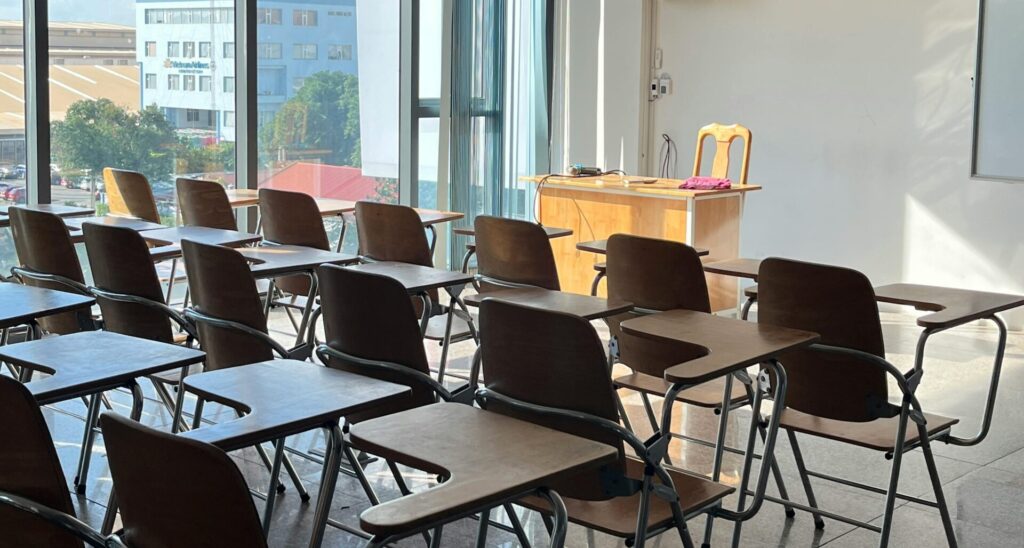
Maureen, another student interviewed in CBE, describes her experiences with STEM instructors who are unsupportive or detached, “Some professors tend to be closed, and it’s just a job to them. So, once they’re out of the classroom, they don’t respond to emails, they don’t talk to students, things like that.” Maureen’s statement illustrates how students often feel alone in these demanding STEM environments, especially when instructors are unresponsive.
As enrollment in STEM programs continues to grow nationwide, more students than ever are entering rigorous academic environments that demand high performance, long study hours, and constant evaluation. STEM fields have become gateways for many students, especially low-income, first-generation students, to stable, high-earning careers in STEM.
At the same time, the culture within some of these STEM programs remains intensely competitive. These programs put a high demand on grades, productivity, and strain on one’s well-being, whether that be emotional, physical, or mental. A study conducted by the American Psychological Association in 2022 found that “perfectionism increased from 10% to 33% among students,” which led to higher academic burnout and decreased performance over time. As participation in these programs expands, so does the need to understand how these environments affect students beyond academic outcomes.
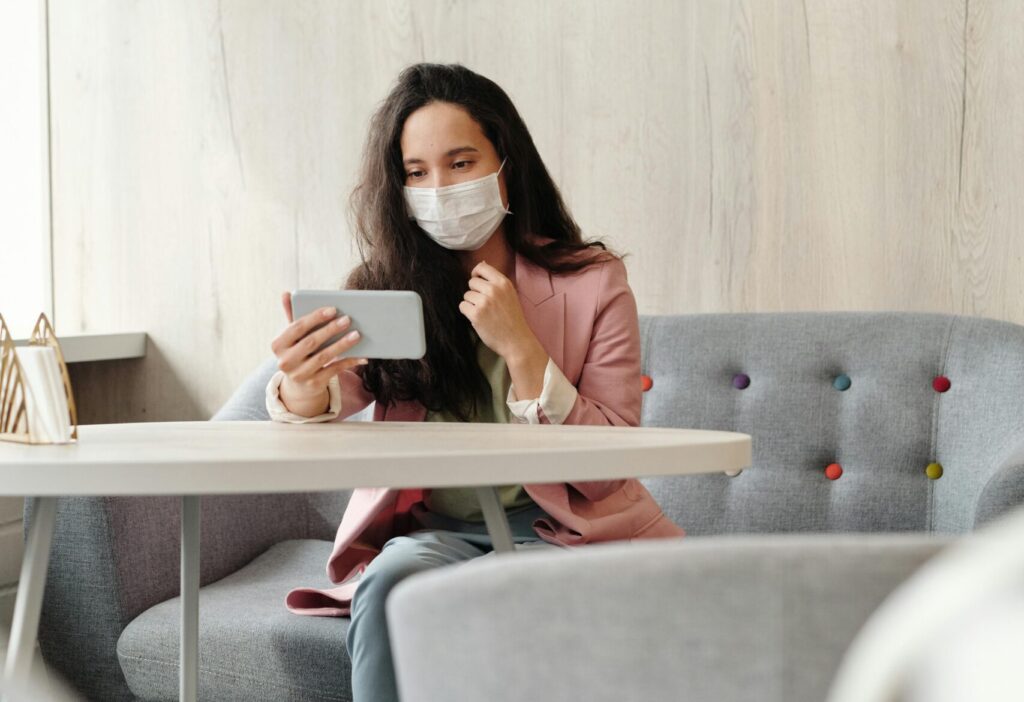
With the rise of digital technology, the isolation surrounding college students has been complicated further. While online remote learning platforms, like Zoom and Microsoft, have made STEM education more accessible, they have also reduced opportunities for in-person connection. Study groups that once met in libraries now meet over Zoom. Questions once asked after the lecture are sent as emails, sometimes unanswered. For students already navigating demanding coursework, this shift toward virtual engagement may deepen feelings of isolation.
The Need To Support Students Better
Exploring the isolation of STEM students is important because both academic culture and technological change, together, are reshaping the college experience. As institutions expand STEM programs to meet demands, understanding how students experience belonging, support, and mental wellness within these programs has become critical. It is not only about academic success; it is about whether students feel supported and able to succeed in environments that are becoming increasingly rigorous, but not increasing student support.
David Chan, a professor at Virginia Commonwealth University, studies mathematical biology, with research spanning ecology, epidemiology, medical modeling, and social dynamics. In his recent pilot study, published in June 2025, Chan focused on how university students’ local support networks influence their academic performance and mental health.
He and his team developed an IRB-approved questionnaire and collected responses from just under 500 students between April and June 2020, at the onset of the COVID-19 pandemic. The survey examined whether students had reliable sources of both academic help and emotional support. One of Dr. Chan’s most significant findings was from the initial testing phase, the identification of what he calls a “prime supporter”. Students who reported having a prime supporter appeared to experience both stronger academic and mental health outcomes.
Dr. Chan states, “An individual who you can rely on for all four types of help, whether it’s routine or intense, both academic help as well as emotional help.” In Chan’s framework, a prime supporter is not just someone who helps with homework or listens occasionally; instead, it’s one person a student can consistently turn to across both academic and emotional situations, whether the issue be minor or serious.
Chan explained that academic performance and mental health are deeply intertwined, noting that students who are struggling emotionally may see their grades suffer. These academic setbacks can also contribute to depression and stress. By mapping students’ support systems, his research seeks to identify which students may be most vulnerable and what kinds of interventions could better assist them. Rather than viewing academic success as an individual responsibility alone, his work highlights how connection, stability, and access to reliable support shape student outcomes. This is especially true in high-pressure environments like STEM programs.
Dr. Chan says, “If we better understand their support network, then we could have better strategies in terms of helping out students.” Students who have consistent, reliable support are more likely to perform well in academically rigorous programs. They are less likely to experience prolonged stress or depressive symptoms. This reinforces his argument that connection plays a measurable role in both achievement and well-being.
Burnout, Stress, and Isolation: A Systemic Issue in STEM
A study done by Professor Christian Pastor, an associate professor of Materials Science at the University of Delaware, explored mental health in STEM. Pastor undertook this work after noticing that many graduate students expressed dissatisfaction and emotional strain despite studying in environments that appeared outwardly ideal. The study, co-authored with a psychiatrist and an early-career colleague, aimed to raise awareness and provide tools for mental health support.
As enrollment in STEM programs continues to rise nationwide, more students than ever are entering academically rigorous environments that demand high performance, constant evaluation, and sustained intellectual intensity. Professor Christian Pastor argues that the issue may be systemic rather than individual.
Pastor says, “We have a systemic problem here; it may be time to rethink how we approach STEM education.” Noting that the issue may not simply be individual students struggling to cope. While STEM education can remain challenging, institutions also have a responsibility to provide strong support networks.
As conversations around mental health gain traction in academia, scientists like Pastor are garnering attention not for a lower standard, but for questioning how institutions can uphold rigor without normalizing burnout and isolation. What caught him by surprise was that these experiences were not rare exceptions; instead, recurring themes and patterns across labs and departments.
“Dragging students from homework to homework isn’t the solution, but having only one final to dictate your future isn’t the solution either,” says Pastor. Reflecting on the constant cycle of deadlines that many students experience perpetuates the high stress and anxiety even further.
Related Posts