
News Team member Maddy Beauregard reports on how a flexible online therapy program could expand mental healthcare access for new and expecting mothers.
A new study shows that how people engage with their religion may shape how they handle stress, for better or worse
By Gregory Gavi
A June 2026 study by researchers from several universities, published in the Journal of Religion and Health, found that certain religious practices may significantly improve mental and physical health outcomes. Specifically, participants who practiced religion were, on average, more resilient to periods of high stress.
According to a 2024 Gallup survey, over 75 percent of Americans identify with some form of organized religion. Religion plays a significant role in American society, and many have long treated health and religion as completely separate entities. Yet these recent study findings on their intersection raise questions about how individuals could use their religious practices in constructive, healthy ways.
“What we really wanted to understand is, first and foremost: is there even any connection between spirituality, religion, and health?” said Augustine Cassis Obeng Boateng, one of the paper’s contributing researchers from the University of Pennsylvania. “How could we use spirituality as a resource to help with whatever drama or medical condition that they’re dealing with?”
The research team analyzed pooled data from three previous studies, collected in the United States between 2001 and 2018. Together, the researchers included over 5,059 participants. The combined dataset included several typically underreported population groups: nurses, Hispanic communities, and American Indian communities.
All three studies tracked participants over multiple years and included self-reported questions about perceived stress and current health status. Each participant was asked how they used religion to manage their stress and health conditions.
The research team found that participants who engaged in religious practice, such as prayer or seeking spiritual support, showed increased mental resilience and a greater ability to cope with periods of intense stress. A religious viewpoint can help reframe struggles as opportunities for spiritual growth. Alternatively, religion can provide meaning: individual prayer gives participants a moment to unwind, while community gatherings offer opportunities to build relationships with others.
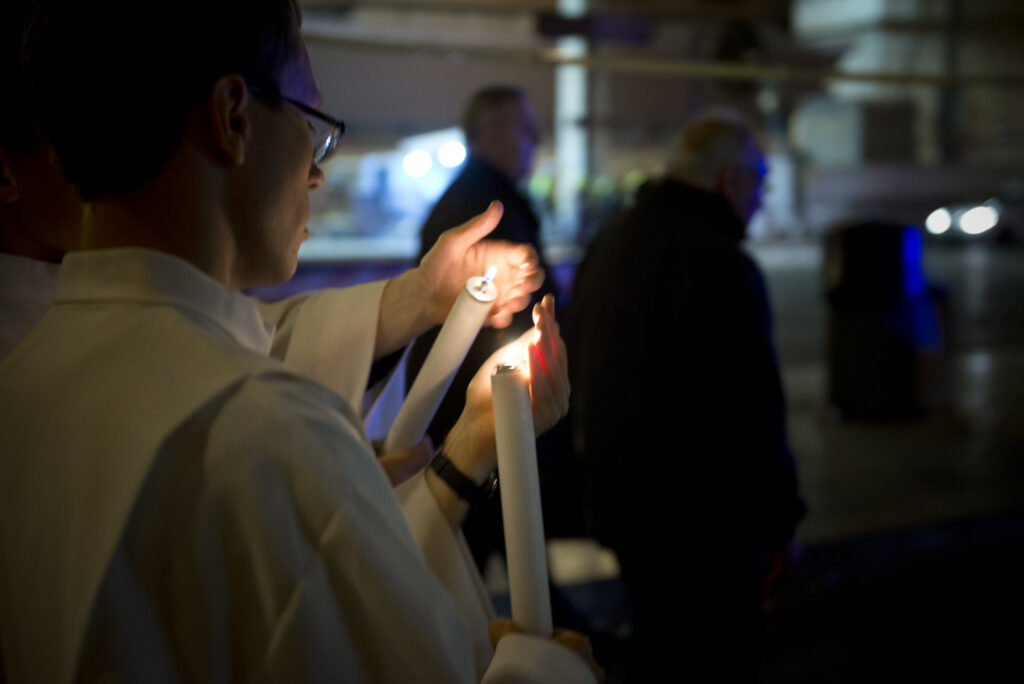
“Canonization 2014 – The Power of the Cross” by Aleteia Image Partners is licensed under CC BY-SA 2.0 

 .
However, researchers found a fascinating distinction: Religious practice was not always inherently beneficial. Intense periods of spiritual struggle can trigger immense shame and discontent, weakening resilience. This can be triggered by social exclusion or personal guilt from engaging in actions forbidden by their religion, such as alcohol and drugs.
To investigate this effect, researchers divided reported religious practice into two common categories: positive and negative religious coping. “Positive religious coping is using your beliefs and your spirituality to frame a situation in order to make meaning of the suffering. It’s like a lens that is used,” said Dr. Katherine Carroll Britt, a study coauthor and researcher at the University of Iowa investigating spiritual care for dementia patients.
Conversely, negative religious coping refers to increased feelings of stress within an individual due to discontent with their spirituality. For example, Christian individuals may feel punished by God for wrongdoing when they receive a diagnosis, such as respiratory illness, further adding spiritual stress to physical stress, said Dr. Jason Ashe, an Emory researcher whose work examines how religion impacts race-induced stress.
Researchers noted a substantial gap between the two coping types. Positive religious coping was linked to less stress-related harm to physical health. On the other hand, negative religious coping saw an increase in the amount stress affected participants’ physical health.
Boateng’s research matched what he witnessed while working with patients across Philadelphia: A mother grieving over the suicide of their child. Adults in West Philadelphia were traumatized with PTSD from violence and gunfights. “But when they remember to say a prayer at night,” he said, “It helps calm them down.”
These self-reflection practices can be uniquely beneficial, adds Ashe. Meditation, prayers, and contemplation—these practices slow the day and create moments to breathe deeply and reflect.
Religious communities can also be strong supporters during periods of stress, Britt adds. They can provide a meal, shelter, and comfort. Similarly, social religious norms can encourage healthy behaviors, such as avoiding alcohol or drugs. Having a greater sense of meaning and community helps people hold themselves accountable and maintain good behavior during emotionally challenging times.
Yet, negative religious coping can have equaldangers. Breaking a rigid social norm, such as around alcohol or drugs, can trigger social exclusion or personal spiritual guilt. This guilt can lead to a spiral and unleash more stress and unhealthy behaviors.
Better stress management strategies with positive religious coping, or high stress experienced from negative coping, can lead to physical health effects. Excessive stress can take a physical toll on the body, while also exacerbating pain when health issues arise. Positive habits from religious discipline can build into a healthy lifestyle.
Religion can affect healing in other ways. For example, a doctor may prescribe medicine to a patient, unaware that ongoing fasting could trigger additional side effects. In many possibly positive and negative ways, religion appears to play a role in health.
Fascinatingly, the paper’s findings on religious coping, stress, and health outcomes appear to extend across, and vary within, different population groups, including race and gender. “What was really important, particularly about a paper like this, is that it starts to show us that there actually might be some ways that this is different for some women versus other women,” said Ashe. Furthermore, “we can see those differences by race and culture.” These trends across cultures and genders suggest that these findings could hold regardless of religious practice. Variation between and within these groups raises new questions about what factors make a behavior positive or negative coping.
The paper’s findings on religious coping and stress outcomes, and ultimately health, join a growing debate over whether health and religion should be treated as separate entities.
Yet, healthcare has long been intertwined with religion. Christian institutions established the first hospitals during the Middle Ages. Most doctors in the early American colonies were also ministers. Hundreds of years later, more than one-quarter of American hospitals are still run by Catholic organizations. Religion in medicine is not new.
Many researchers suggest it is time clinicians paid more attention to religious practice in healthcare. A 2015 study in the journal Patient Education and Counseling found that 70.5 percent of patients were open to discussing religion with their physician. Yet, such conversations occurred during only 15 percent of visits. These conversations could provide more comprehensive patient care, yet physicians do not consistently initiate them.
“Oftentimes, spiritual beliefs are the reason why a patient might be engaged in specific health behaviors,” said Boateng. “We as clinicians do not take the opportunity to inquire more.” These conversations have long been lacking, despite the high demand for patients to engage in them. Boateng attributes much of this gap to limited physician training on religion.
This study is one of many steps in highlighting the importance of considering religious practice when understanding one’s health. Researchers have only begun to unravel the ways the two are linked. Regardless of the type of religious belief, the health effects can be significant. “The message is not that religion is good for you,” said Britt. “The message is some people find this helpful and others harmful if not reconciled.”
Related Posts